
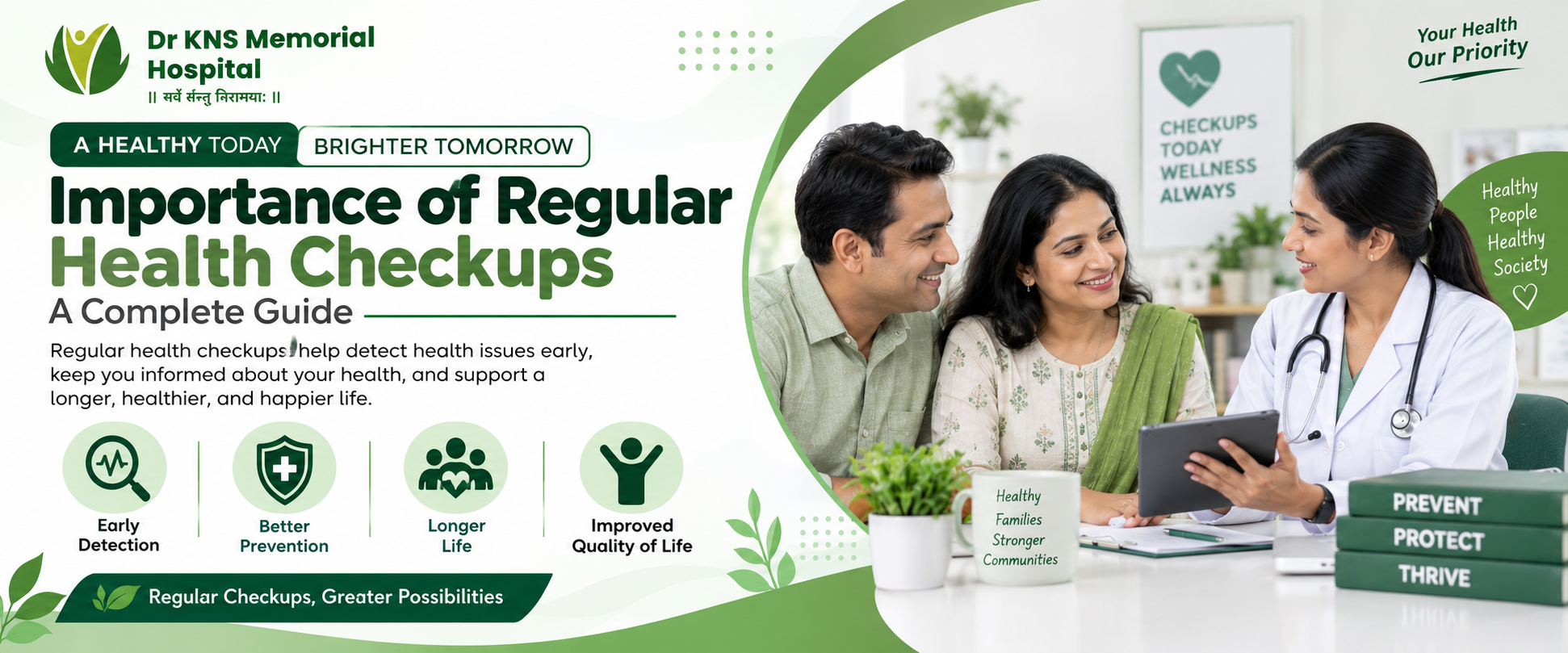
Introduction to Regular Health Checkups
The vast majority of people don't go to a doctor unless they already don't feel well. But that approach is completely reversed with a regular health checkup. Instead of waiting for pain, fatigue or a physical sign, it examines your body on a regular basis before any small problems become large and difficult to manage and treat.
Imagine you are servicing your car before it breaks down, instead of after the fact. A checkup doesn't go on the wait for a warning light. It not only monitors blood pressure, sugar levels, cholesterol, organ function and so on when you're feeling well, but many health conditions develop over a number of years without you realising.
The guide covers the reasons checkups are important, what happens at various ages, the types of tests that are typically performed, and how to be prepared for the next checkup to be beneficial, not routine. If you've never had a full exam or you're overdue for your annual exam, knowing the basics will make the process a lot less intimidating, and, much more, doable.
What Is a Health Checkup?
A medical examination that is conducted at a specific time, with the doctor checking on your overall health even if you don't have a complaint. Typically involves a physical exam, simple blood tests, blood pressure check and medical and family history.
It can also include screenings such as cholesterol levels, diabetes or cancer depending on your age and risk factors. This is not a diagnostic test for an existing illness, but rather a test to create a current, accurate image of the way your body is working, but then to monitor changes over time and treat them early.
Why Preventive Healthcare Matters Today
Modern lifestyle is characterized by more sitting, more processed food and more stress than previous generations, and these all add up in silence over the years. Preventive health care is designed to identify the consequences of such behavior in time to avert larger issues.
Diseases such as high blood pressure, diabetes and high cholesterol may not have any symptoms in the early stages. You may feel perfectly normal but for years, these numbers slowly get worse. A routine checkup breaks the cycle, allowing for early intervention by doctors, when lifestyle changes or simple treatment can make the greatest impact.
Why Regular Health Checkups Are Important in Today's Life
The world we live in is fast and health may be something that is done only in response to symptoms rather than in a proactive manner. The regular checkups are important because they help to change the entire tune from treatment to prevention, a more manageable, more affordable and less stressful process in the long term.
They also include pressures of modern life such as long working hours, irregular sleep patterns, high stress and diets which are too processed. These are not apparent alone, but combined they increase the likelihood of long term, progressive and silent diseases. One of the few tools that can detect this change in real-time is a checkup.
Regular checkups create a health history over time, as well as catching issues. A single test result is not very significant, but if tests are repeated annually, a trend can be identified, such as an increase in cholesterol, an increase in blood sugar, or a stable blood pressure. This pattern is frequently more helpful to a doctor than any one number.
This is even more important in today's day and age. Long commutes, desk jobs, late nights and convenient, but not healthy, foods are all commonplace—and none of these say it to the body's face. One of the few formal methods to really understand what these daily habits are doing under the surface, not just by how tired or energised you feel that week, or by how you think things are doing, but by having a checkup.
Early Detection of Diseases
Diseases such as heart disease, diabetes and some forms of cancer, can progress slowly and have no signs of illness in the early stages. The signs and symptoms may be present when the condition has advanced quite far.
Regular checkups are intended to discover these changes prior to the appearance of symptoms. The first clinical features of diabetes are often detected with a general blood test which may be weeks, months or even years before you will ever feel thirsty or tired. Early detection generally also leads to easier treatment, and reduced complication. The prognosis may even be better than with late detection.
Prevention Is Better Than Cure
It is much more complicated and harder and costlier and more disruptive to life to treat an advanced disease than to treat a predisposing condition at an earlier stage.
- Early detection of high cholesterol may require lifestyle changes, such as diet and exercise, and no medication.
- Early detection of diabetes risk can often be treated without the use of medication.
- Early detection of hypertension prevents the heart and kidneys from being overworked.
The principle behind preventive health care is that it's easier to change a habit than undo damage over a period of years.
Monitoring to Existing Health Conditions
If you already have an existing medical condition such as a thyroid condition, diabetes or high blood pressure this is not a separate extra it is a mandatory component of treatment and monitoring is carried out to assess response to treatment and see if it needs changing.
- Blood sugar is a gauge of whether diabetes is under control.
- Blood pressure measures help determine if the right dosage of medication is being given.
- Blood tests on a regular basis will detect side effects of long-term medication early.
If there is no routine follow-up, current conditions can slowly deteriorate and go undetected while a person thinks he or she is doing well on treatment.
Key Benefits of Routine Medical Exams
The benefits of routine medical exams are more than just early detection of disease. They lay the foundation for improved health decision making, for you and your doctor, throughout life.
- They establish a standard, making it easier to see and understand changes in the future.
- They provide you access to real world advice and not general advice.
- They help alleviate fear of the unknown and bring clarity instead of uncertainty.
- They are adept at picking up on small problems, such as a low level of one or more vitamins or low readings.
The more frequently these tests are performed the more they are worth. One checkup at one time is valuable, but it is not very helpful. The same checkup done annually creates a "timeline" and a timeline is what shows if your health is improving, steady, or even taking a wrong turn and going down. That's one reason that doctors tend to focus on the trend of a number rather than the individual number.
Of course, there's the added benefit of routine exams that is very obvious, but it's easy to forget: they help make decisions easier. You don't have to guess if a symptom is serious enough to take action on or if a habit is impacting your health. You have real data to work with rather than guessing if a symptom is serious enough to take action on, or if a habit is impacting your health. That transparency can help decrease unneeded worry and unneeded physician visits for uncertainty.
Improved Long-Term Health Outcomes
Individuals who receive regular screenings are more likely to detect and control health risks at an early stage, resulting in a better health outcome in the long-term, but not short-term. Early interventions are often small but prevent big interventions later!
This is particularly important for conditions with long-term implications such as heart disease and diabetes, where early intervention can make a big difference to the long term prognosis. An acquired habit in the 30s or 40s tends to be most evident when you're in your 60s or older.
Better Mental Health and Stress Management
Physical and mental health go hand in hand and physical examinations frequently reveal conditions that have an impact on mental health. If you are feeling tired, have trouble sleeping or if you have lost or gained weight for no reason, this may also indicate a physical cause, which can also impact your mood and stress.
When you know your health status, you also have less of a background anxiety level – one that is caused by the uncertainty of not knowing if something is wrong.
Personalized Medical Advice and Guidance
A checkup is more than a series of tests, it's also a conversation. The results are used by doctors to provide you with advice for your body, not an average.
- Individuals suggestions for diet and exercise according to your actual cholesterol or sugar level.
- Advice on next screening(s) based on age and risk.
- Early identification of families with a pattern of problems that require more attention.
It's difficult to receive such direction without the proper checkup as a foundation.
Essential Health Screenings by Age Group
The types of health screening recommendations vary by age, and the recommendations that are appropriate for your 20s are completely different from those recommended after you hit 50. Knowing this timeline will enable you to know what to expect and why some tests are added over time.
Doctors don't only take your age into account when developing a screening plan, but it's typically the foundation. As you get older, your risk of developing diseases such as heart disease, diabetes or some types of cancer increases, and the number of recommended tests increases, rather than decreasing, as the decades go by. This timeline can be affected by a person's family history, lifestyle, and existing conditions, and can be moved up, all the way to early adulthood, in some cases.
It also is helpful to consider these age groups as "overlapping" rather than "cutoffs. The last person, whose late 30s heart disease history is similar to that of men in their 40s, should begin screening typically reserved for the 40s, while the other, who is in good health despite being over 50, may not need all the tests every year. The following age divisions are a good guideline, rather than a book of rules.
This is also influenced by gender and lifestyle. If you have a physically demanding job, a smoking habit or a desk job, you may be at a higher risk of developing the disease than the general guideline, and require more or earlier screening than the age group. This is why the checkup itself, rather than a checklist, is the most effective method of verifying body requirements, rather than relying on a checklist.
Health Checkups in Your 20s and 30s
It is common for this age group to not seek medical care at all, believing that they are healthy at this age. However, instilling the habit at a young age provides a great foundation for the years to come, and can be used for comparison at checkups later on.
- Simple BP and BMI measurements.
- A blood sugar test and cholesterol test, particularly if the family has a history of diabetes or heart disease.
- Routine blood tests to detect deficiencies, such as iron or vitamin D, at an early age.
- An eye and dental exam (which is typically not done in this age group).
Recommended Screenings in Your 40s
It is usually the time when risk factors for chronic disease begin to become more relevant even if one feels perfectly healthy. Typically, screenings will broaden to include a larger number of potential problems as this is often the decade when the effects of years of lifestyle choices begin to manifest themselves in medical tests.
- Thorough cholesterol and heart health checkup.
- Screening for diabetes, especially when weight gain is observed and/or diabetes runs in the family.
- Appropriate age and sex based cancer screenings as recommended by a doctor.
- Bone density tests particularly for sedentary people.
Important Tests for 50 and Above
Generally, checkups are more extensive after the age of 50, because there is a higher risk of developing multiple chronic conditions at that age. Once this time comes, annual visits take on a much greater significance and many physicians suggest that these visits are not an option but a must.
- Full cardiac examination (where recommended) including ECG.
- Cancer screening (colon and other cancer screenings as applicable).
- Bone density and joint health tests.
- In addition to normal blood tests, vision, hearing and cognitive health evaluations.
- Routine blood tests (kidney, liver function tests) that are more significant as age increases, and when taking medication for a longer period.
Common Tests Included in a Regular Health Checkup
Most normal checkups are made up of a basic set of tests, which, although different in each hospital and depending on your own risk, cover the most common and important health risks.
The core tests are the ones that address the conditions which are likely to occur without symptoms and are likely to be effectively treated early. Checkups are designed to look for the early warning signs of the three main categories of preventable health problems heart disease, diabetes and some cancers.
What may be considered a "standard" checkup is not the same everywhere. Most basic, comprehensive and specialized packages are available in hospitals, and the standard tests below are the foundation of most packages. It will be easier to understand the results of these baseline tests and ask questions during your visit if you know what these tests are measuring.
When a report ever seems confusing, keep in mind that most values have a range of values that are printed on the same line. If the result is just outside of this range, it is not necessarily alarming, but it should be discussed with your doctor as they can place it in context based upon your history, symptoms and previous tests. This context is the reason why test results can have varying meanings for two patients.
Blood Pressure, Cholesterol, and Heart Screening
Most of the tests are related to the heart because cardiovascular disease is one of the most prevalent and preventable diseases in adults today.
- Measurement of blood pressure, at rest, preferably taken more than once in the visit.
- Lipid Profile: Total cholesterol, HDL, LDL and triglycerides.
- An ECG in those above a certain age and/or those who have risk factors.
- A general cardiac risk assessment (family history and lifestyle).
Diabetes and Blood Sugar Tests
With the prevalence of diabetes and prediabetes, blood sugar testing is done at most routine checkups even when there are no signs or symptoms of the disease until later.
- Blood sugar test that's taken after an overnight fast (first thing in the morning).
- Average blood sugar levels seen over the last 3 months (HbA1c).
- Further testing if results are in a "borderline" or "high-risk" range.
Cancer and Preventive Screenings
Recommendations for screening here vary widely based on age, sex and family history and are usually different for each person, so a doctor doesn't use a standard list of screening recommendations for everyone.
- Screenings (e.g., mammograms, PSA tests) according to age and sex.
- Skin examinations of unusual moles, or changes.
- More specific screening referrals for higher risk as indicated by family history.
How to Prepare for a Health Checkup
With a bit of preparation, a checkup will be more helpful, both in terms of the accuracy of the results, and for the quality of the conversation you'll have with your doctor.
- If blood sugar or cholesterol tests are scheduled, fast for 8 – 12 hours.
- Do not do heavy exercise on the day before as this may have an effect on some readings for that day.
- Dress in comfortable clothing which allows blood pressure and physical examinations to be performed more easily.
- Get a good night's sleep prior to the test, as being tired can affect some of the results.
- Drink plenty of water (most fasting guidelines permit water).
All of this preparation doesn't have to be difficult. The aim is to eliminate temporary influences (such as heavy meals or strenuous exercise activity) which can lead to a misleading result and give the impression of being below or above your true baseline.
Medical History and Documentation
Taking the appropriate information will save time and enable your doctor to better interpret your results. This can be particularly helpful if you're seeing a new doctor or new hospital for the first time.
- List of medications and supplements currently being used.
- History of previous operations or serious diseases.
- Hereditary disorders such as diabetes, heart disease or cancer.
- Previous test reports (if available) to compare.
Questions to Ask Your Doctor
Checking out is also an opportunity to get direct answers, so it's best to come with a few questions and not just what you get.
- What are the results that don't fit the rest of the data and what does that imply?
- Should there be any screenings for my age or history?
- What is the one lifestyle change that you can make today that will have the greatest impact?
- What is the frequency of this checkup in the future?
Common Myths About Regular Health Checkups
Some misconceptions keep people from taking advantage of yet more checkups. Getting rid of these doubts can take away the final one.
Many of these myths have in common that they equate the lack of symptoms with good health. It seems like a reasonable assumption, but it doesn't work out as many common conditions do. High blood pressure, high cholesterol and early diabetes all have no symptoms or very few symptoms in the early stages of the disease – sometimes for years.
These myths can be a hindrance to one checkup, and to preventive care in general. If he or she doesn't start at 25, then he or she is even less likely to start at 35, and more years will go by without a baseline established. It is important to directly confront these misconceptions to start the first actual steps towards developing a regular checkup schedule.
I Feel Fine, So I Don’t Need a Checkup
This is likely one of the top reasons that people avoid checkups, and it's one of the most wrong reasons. Some serious health issues like high blood pressure, diabetes and high cholesterol do not show any symptoms until they have reached an advanced stage.
How you feel is not necessarily how you're doing inside your body, feeling fine is a reflection of that.
Health Checkups Are Only for Older Adults
Although screening is often considered in aging adults, this does not imply that younger people may be missing. The increase of diseases related to our lifestyle, called “lifestyle-related diseases,” in those 20 or 30 years old (e.g., diabetes and hypercholesterolemia) is also observed.
Early diagnosis also provides a good baseline. If your doctor has years of previous test results to compare, it's easier to notice the difference that may be important than if you are a young person starting to experience your first symptoms later in life.
Conclusion: Taking Charge of Your Health
Having a health checkup is not a time to assume there is something wrong, it's a time to be proactive about issues that may arise. These benefits extend from early detection through to personalized guidance, at any age or stage of health.
The information provided in this guide is intended to be a guide only and not a substitute for professional advice. Your age, lifestyle and family history will help determine the right screening schedule, and that's what a doctor can help you chart, during your next visit.
There's no need to make a radical change in your lifestyle to implement these changes. All it takes is to book one appointment and then consistently schedule it in the years that follow as if it were the first of many - not a single appointment to be checked off.
Building a Preventive Healthcare Habit
As usual, it's the consistency of a good habit that is more important than its intensity. A yearly comprehensive exam is more beneficial for long-term health than an exam when symptoms occur or when someone suddenly becomes concerned.
- Schedule a specific time of the year to have the checkup to avoid it being overlooked.
- Store old reports in chronological order in order to easily identify trends.
- Treat as a routine maintenance and not an emergency response.
Long-Term Benefits of Regular Medical Visits
When you see your doctor regularly over a number of years, that's equivalent to having a detailed history of your health that you could never get in a single visit. This history will be one of your doctor's best resources should something need to be addressed.
Regular visitations allow you to one-a-time chip away at the frequency of emergencies, prevent minor issues before they become major ones, and get to know your body better.
FAQ
Potential health problems are detected at an early stage, often before the problem becomes noticeable, making it easier and more effective to treat.
Most adults should have a checkup every year, but your doctor might suggest more frequent checkups if you have other health problems, or if you are older.
Common tests performed include blood pressure, blood sugar, cholesterol and a physical examination – some other tests are performed depending on age and risk.
Screening is beneficial starting in your 20s and more in-depth screening begins in your 40s and older.
Yes, many check-ups are meant to detect diabetes, high blood pressure and high cholesterol, which don't have symptoms.
Yes. Several common conditions may not have any early symptoms, so if you feel well, it doesn't mean that you don't have a problem.
They allow for the monitoring of health trends over time, can detect health problems early, and provide doctors with the necessary information to make personalized health advice.
Individuals greater than 40 years are typically recommended to have comprehensive cholesterol, diabetes and age appropriate cancer screening.
They enable action to be taken on risk factors at an early stage and this typically results in less complications and better health outcomes in the long-term.
If necessary, fast the day before, don't do too much exercise the day before, and come with your medical history.
Yes, lifestyle-related diseases are becoming more common in young adults and it is helpful to establish a baseline of health when they are young.
They could go far in soothing worries about your body’s health, and also point to bodily complaints which can affect the mood such as lethargie or nutrient deficiencies.
Preventive care examines risk factors before symptoms occur and diagnostic care examines a symptom or existing complaint.
Recommendations are made based on your individual test results, medical history and risk factors, and not just based on guidelines.
Common misconceptions are that people think they don't need check-ups if they don't have any symptoms, or that only elderly people need check-ups.