
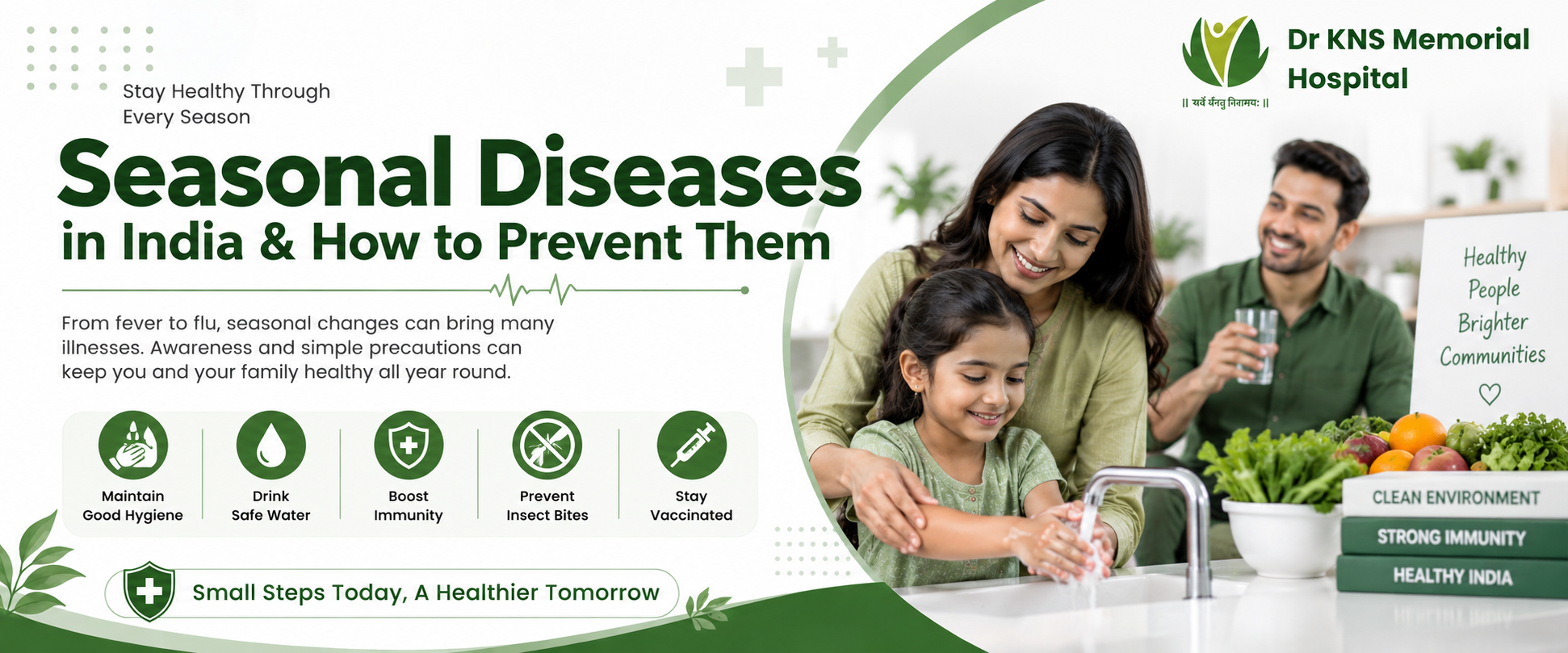
As the seasons change every year, there is a significant increase in seasonal diseases in hospitals in India and the monsoon months are the busiest of the year. High humidity, water logging and temperature variations provide the ideal breeding ground for viruses, bacteria and mosquitoes to spread much more quickly than normal.
With the onset of rain, monsoon diseases often escalate as still water and polluted food or water sources become more prevalent. Knowing how diseases spread during the rainy season and what you can do to reduce your risk can make all the difference in being able to stay healthy this rainy season instead of suffering from illness after it's caught.
What Are Seasonal Diseases?
Seasonal diseases are diseases that occur in larger numbers during certain seasons of the year, typically in close association with the weather, humidity, and temperature. These conditions are not regular year-round, but rather peak in specific months, usually the monsoon and summer months.
This is particularly noticeable in India during the rainy season when there is an increase in the incidence of viral infections, vector-borne diseases and water-borne diseases at the same time. Although the reasons are different, whether it is mosquito breeding in stagnant water or contaminated food and water, the periodic increase is a very familiar pattern that doctors are ready for each year as the seasons change.
Why Do Seasonal Diseases Increase During Weather Changes?
Viruses, bacteria and parasites can survive and spread more easily in certain weather conditions. Mosquito breeding is favored by high humidity and lack of movement of water, and polluted water sources increase during periods of heavy rainfall. Rapid temperature fluctuations may also help to compromise the body's resistance to infection. These conditions account for the fact that illness doesn't always happen in every season, but rather seems to group together in certain seasons.
Common Monsoon Diseases in India
The monsoon diseases range from mosquito-borne diseases to water-borne diseases, and early detection of these diseases means effective treatment. During the rainy season, diseases repeat themselves in a more or less similar form year after year, and it is therefore very useful to be aware of the most common ones in each household. Hospitals across the country also tend to record a significant surge in the number of people who have fever, gastrointestinal infections and vector-borne diseases, and this trend is fairly predictable, occurring a few weeks after the heaviest rainfalls, from one monsoon to the next.
The early symptoms of the rainy season diseases are very similar making it very difficult to know which disease you are dealing with. If fever is high on the first day or two, it may be due to a simple viral infection, but it may also be an early symptom of more serious infections that require attention such as dengue fever or typhoid fever. That overlap is the reason why doctors are recommending people have check-ups, rather than assuming that the mildest explanation holds true, particularly if symptoms do not improve within a couple of days or if they get worse but don't improve.
The diseases that are most prevalent this time of the year in India and the likely causes thereof are explained below, along with what to be on the lookout for. With a basic understanding of each one, it will not only make it easier to know when you or a loved one get sick and need rest and time to recover, it will also make it easier to understand when something requires more than home care and rest, and when a proper medical evaluation is truly needed.
Viral Fever and Flu
It causes many diseases in the monsoon season, and viral fever and flu are the two that spread easily. The symptoms generally are headache, body ache, sore throat, tired feeling, etc. Most people get cured by rest and ample liquids, but if the fever continues and if very high then medical opinion should be sought.
Dengue and Malaria
Mosquitos become an issue and carry the monsoon diseases, Dengue and Malaria, when water does not flow around houses and neighbourhoods. Dengue fever consists of severe body pain, rashes on skin and fever, while in Malaria, there are episodes of fever, followed by periods of chill and sweating. If left untreated, both diseases will be severe.
Typhoid and Cholera
Transmitted mostly through food and water sources, Typhoid and Cholera occur mainly during monsoon season as water sources are susceptible. The general signs and symptoms are a long duration of fever and abdominal pain with diarrhea. Water and prompt medication play an important part as the condition can get complicated rapidly.
Leptospirosis and Water-Borne Infections
The disease is spread through contact with contaminated water, especially in waterlogging and flood conditions, from animal urine. The first signs and symptoms are often those of flu: fever, headache, muscle pain. Avoid flood water and seek treatment for any fever if it is not explained after contact with monsoon to avoid any complications.
Skin and Fungal Infections During the Rainy Season
Fungal and skin infections may increase in occurrence during rainy seasons as the humidity and wet clothing are constant. Symptoms are rashes, itching and irritation in moist skin areas. To prevent these infections, wash skin regularly, change wet clothes promptly and wear breathable clothes.
Rainy Season Diseases and Prevention Tips
Rainy season diseases and prevention go together; most precautions are easy to incorporate into your daily activities, and don't disrupt your routine. There are a number of regular factors that can significantly reduce the risk of diseases in rainy season and none of the ones that follow are necessarily extreme or costly.
Most monsoon prevention tips are simple: Avoid exposure to contaminated water and food, minimize mosquito breeding close to your home, and build up your immune system to be better equipped to deal with an infection. Those households that continue to practice the items listed above, not just when they see an outbreak in the area, experience more significantly reduced illness among family members, especially children and older family members who are more susceptible to complications.
All of these steps don't have to be scary. Many are the little decisions made each day, such as looking out for any wet spots around the house or being a bit more mindful about the food and beverages you consume on the go. Establishing them in the early season, before rains are in full swing, is much easier to maintain over a season when infections are increased in your neighbourhood and city. The five habits you will be focusing on are the ones that will have the largest impact.
Maintain Personal Hygiene
Other tips like wearing shoes in the rain to keep your feet dry, washing your hands before eating to not only keep yourself from not touching infectious surfaces but also from not letting fungus to grow.
Drink Safe and Clean Water
Water sources are more apt to be contaminated during the monsoon season, so drink boiled or filtered water during this time. Do not use ice or untrusted sources of drinking water, as these are the likely sources of typhoid and cholera.
Eat Fresh and Nutritious Food
For the rainy season, you should select your dishes that are fresh so that you will not likely find that those street foods lack certain hygiene conditions required. You may take some in-season fruits/vegetables that have rich nutrients which can help boost your immunity.
Prevent Mosquito Breeding Around Your Home
Empty coolers, flowerpots and containers around the house often as they are breeding areas for mosquitoes. Using mosquito nets, mosquito repellents and window screens can also help reduce the chances of getting dengue and malaria.
Strengthen Your Immunity During the Monsoon
An ample amount of sleep combined with correct exercises and diet is very essential to form immunity, capable of fighting with the monsoon symptoms. Keeping yourself sufficiently hydrated while also keeping stress levels in check will help your body get used to increased risk from the infection during season time.
Who Is More Vulnerable to Seasonal Diseases?
Although seasonal diseases are common in everyone the risk of complications is greater and specific precautions are required in certain groups during the monsoon season. The severity of illness in one person to another is affected by age, underlying disease and immune status.
Identifying if someone is in a higher risk group can prompt families to take even more proactive measures, from increased surveillance, to prompt medical attention, to simply being more aware of their risk of exposure to contaminated food, water or standing water around the home this time of year. These individuals might need a bit more care and attention to avoid a minor ailment becoming a major one.
Children, Elderly People, Pregnant Women, and Individuals with Low Immunity
Elderly can recover slowly and are highly likely to face complications whereas kids as immature and immature are prone to infections at most instances. Precautions need to be taken specially during monsoon by pregnant women, as these seasonal illnesses may prove fatal not just to the mother, but also the baby inside the tummy.
Warning Signs That Need Immediate Medical Attention
There are many illnesses that can be treated at home with rest and simple treatment, but some symptoms shouldn't be ignored. Being aware of when a normal fever could be a serious one can really help recovery time.
If within the next few days your condition is not getting better. If the symptoms suddenly worsened or the symptoms accompanied by other worrying indications it's advised to consult the doctors rather than letting it be as long as possible. Whenever there is a situation in the body such as dengue or typhoid, if not attended to, diagnosed and managed according to the expertise of doctors, it might aggravate to an extreme level before they manage to intervene in time.
Symptoms You Should Never Ignore
Seek medical help immediately if you have raised temperature/fever, stomach pains, trouble breathing, unexpected bleeding or appear confused. Persistent vomiting, signs of dehydration and expanding skin rashes will indicate a warning sign. If any of these are present it may indicate that there is a more serious infection that is not a 'self-limiting' condition and will require a doctor to diagnose and treat.
Why Choose Dr KNSM Hospital Lucknow for Seasonal Disease Treatment?
In the case of seasonal illnesses, the diagnosis is as important as the treatment. Dr KNSM Hospital Lucknow brings together skilled doctors and advanced diagnostic facilities so that patients can have answers within no time but without having to wait in uncertainty.
Whether it's common viral ailments or more serious monsoon illnesses such as dengue and typhoid, the hospital's staff can evaluate, diagnose, and treat all of these seasonal illnesses in one. By having this expertise and accessibility, it's easier for patients and families to obtain the care they deserve without unnecessary delays throughout the busiest months of the year.
Expert Doctors, Advanced Diagnostics, and Emergency Care
The hospital's team of senior physicians is well equipped with knowledge of the diagnosis and treatment of seasonal diseases, and has the latest diagnostic facilities with which the conditions can be quickly and accurately confirmed. Where treatment is needed right away, patients do not have to wait long or even all day to be treated, because with round the clock emergency care, they can be treated anytime.
Stay Safe from Seasonal Diseases with Timely Medical Care
Climate change in India brings seasonal diseases with it but it doesn't mean they can cause trouble in your health every year. Spending time on simple precautions of hygiene, food, water and mosquito control is an excellent way to minimise risk during the monsoon season.
When symptoms arise, rapid and effective treatment is possible. The illness should be treated swiftly if you yourself or a member of your family seems to be presenting symptoms of a seasonal illness-get a diagnosis as early as possible to remain safe.
FAQ
Common seasonal diseases include viral fever, Dengue, Malaria, Typhoid, cholera, Leptospirosis, various skin infections and fungal infections, most of which increases during the monsoon season.
Common diseases seen during rain are dengue, fungal skin infections, typhoid, viral fever, malaria, cholera and leptospirosis, most of which are caused by the accumulation of water and contamination of food or water.
The conditions of humidity, waterlogging and stagnant water provide a perfect environment for the multiplication of mosquitoes and bacteria, and infected water sources are more prone to water borne infection when it is this time of the year.
Keeping your home clean, taking in clean water, fresh food, avoiding mosquito breeding areas around your home and boosting your immune system are all great ways to reduce your risk.
But, Dengue is often associated with high fever, severe body pain and rash, while Malaria is associated with fever with chills and sweating in cycles. They both require immediate medical assessment.
Drink water from known sources and eat food that has been freshly prepared and is full of vitamins and antioxidants (such as seasonal fruit and vegetables), and avoid street food.
Monsoon diseases can be more serious in children, elderly, pregnant women and people with weak immune systems or underlying health issues.
A fever that lasts for more than a couple of days, that starts to get worse suddenly, or that is accompanied by other symptoms such as a high level of pain, difficulty breathing, or dehydration is a sign to seek medical help.
Draining water pools around the house, covering windows with screens, and applying mosquito repellents are measures to help lower the risk of mosquito transmitted diseases.
It is particularly important to begin treatment early for diseases, such as dengue and typhoid, that can develop rapidly without treatment.